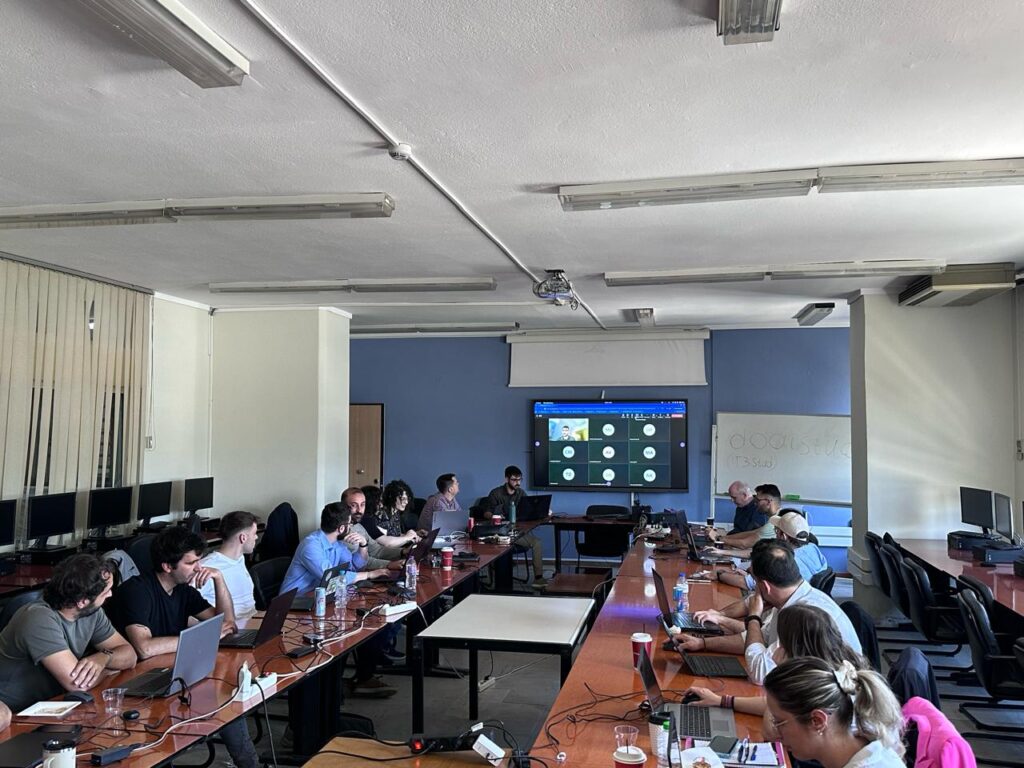
From May 13 to may 15, the RAISE Suite technical team gathered at the University of Macedonia in Thessaloniki for an intensive three-day technical meeting, with more than 20 participants joining both on-site and online. The main objective was clear: to align the technical partners, address open integration challenges, and move from architectural planning towards a functional Minimum Viable Product (MVP).
Aligning the Technical Vision of RAISE Suite
During the meeting, partners worked across the key technical areas of the RAISE Suite ecosystem, including source-side services, data streaming, machine-actionable Data Management Plans, Quality of Data, metadata generation, node-side data staging, and portal integration.
By bringing these areas together in one collaborative setting, the technical partners were able to clarify dependencies, validate implementation choices, and strengthen the common understanding of how the different components will work together.
Defining the First Machine-Actionable DMP MVP and Source-Side Integration
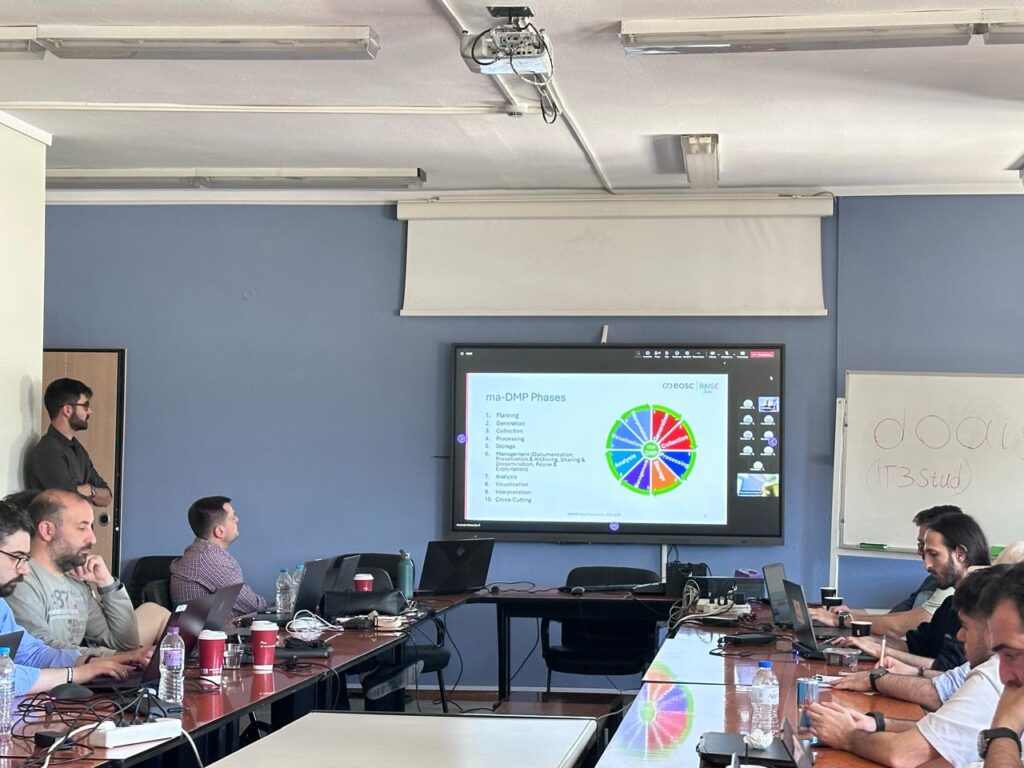
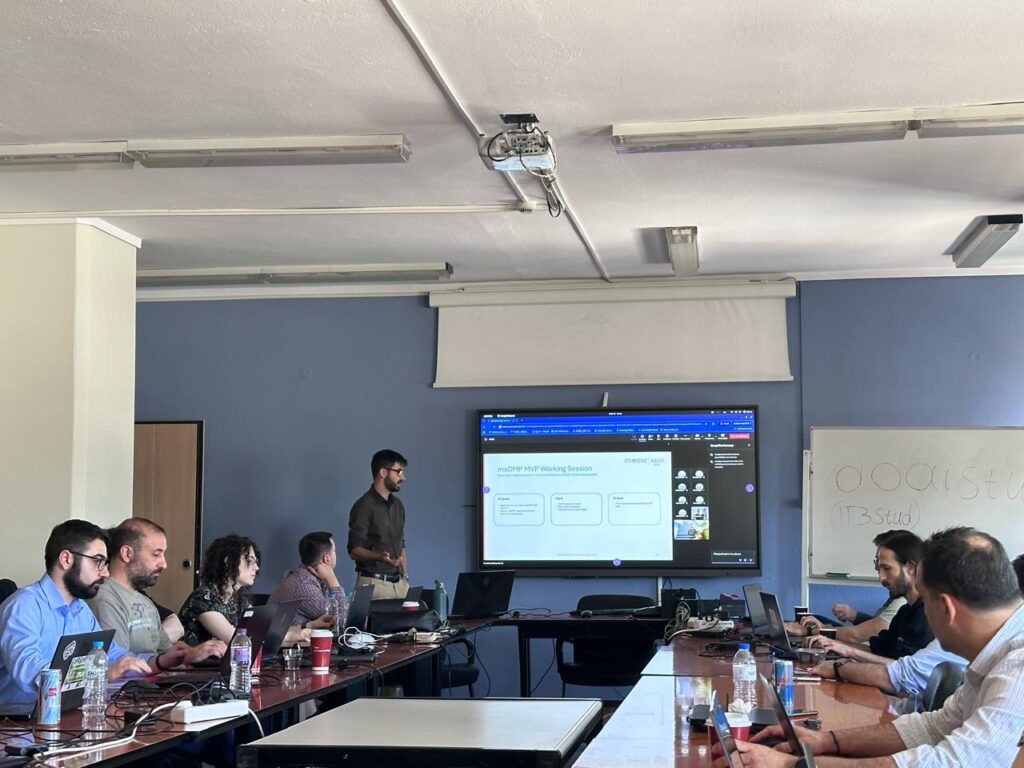
A central outcome of the meeting was the definition of an MVP version of the machine-actionable DMP, building on the RDA maDMP standard and incorporating requirements from pilots and technical partners. This work helped clarify the minimum information needed for RAISE Suite components to communicate, process, and manage datasets in a more structured and FAIR-by-design way.
Significant progress was also made on the source-side integration. The RAISE Suite Agent was deployed locally and used to orchestrate multiple services in one flow. Quality of Data and Metadata services were integrated on the agent side, allowing data streams to be enriched with quality metrics and metadata before being transmitted to the RAISE Suite Node.
On the node side, the streamed data was successfully received, staged, and saved, while the portal integration was advanced to allow users to view the streamed dataset and initiate experiments. This enabled the team to demonstrate an end-to-end MVP flow: deploying the agent locally, streaming part of a real-world dataset, generating metadata and Quality of Data outputs, sending the data to the RAISE Suite Node, staging and saving the dataset, making it visible through the portal, and finally running an experiment on the streamed dataset.
Strengthening Data Traceability, Interoperability and Access Control
Beyond the technical demonstration, the meeting helped clarify several important architectural and implementation points, including the role of the maDMP in coordinating component behaviour, the use of Persistent Identifiers (PIDs) for dataset traceability and citability, and the remaining steps needed for further integration of the anonymization engine, as well as robust authentication, authorization, and access-control mechanisms between the Agent, the Portal and the Raise Streaming Node.
Overall, the meeting marked an important step for RAISE Suite, moving the project from separate technical components towards an integrated, working MVP. The next phase will focus on polishing the source-side and node-side integrations, finalizing the anonymization layer, and strengthening the connection between the Agent/SDK, the RAISE Streaming Node, and the Portal.