Cancer Survivor Monitoring Use Case

Cancer Mission

Life After Cancer, Measured.

Recovery continues long after treatment ends, but who is watching?

This RAISE Suite use case combines smart devices with patients' own reported experiences to monitor quality of life in cancer survivors, turning real-world health data into a FAIR-by-design resource.

At a glance

Pilot Period

M6 – M40

(Feb 2026 – Dec 2028)

Domain

 Health — Cancer Mission

Location / Study Sites
  • Thessaloniki (GR)
  • Kempen (BE)
Participants / Scale
  • 70 cancer survivors
  • monitoring period of 1–3 months​

Main Goal

This use case investigates how real-world health data, from smart devices and patients’ own reported experiences, can support the monitoring of quality of life and frailty in cancer survivors.

Recovery from cancer plays out at home, over months, far from the clinic. By combining questionnaires, the LifeChamps app, and wearable and home devices, the pilot builds a fuller picture of survivorship than clinical visits alone can offer.

The wider aim is to demonstrate that the RAISE Suite framework can enable FAIR-by-design, interoperable, high-quality data collection in the health domain, one of the most tightly regulated data environments there is.

Domain Challenges

  • Data locked behind regulation: Healthcare data is governed by strict privacy rules and legal frameworks, making it difficult to exchange between institutions, and harder still to share beyond EU borders.
  • Fragmented collection tools: Smart devices, questionnaires, and health records live in separate systems that rarely speak to one another, so data arrives inconsistent and hard to combine.
  • Quality and interoperability at stake: Without harmonised protocols, data collected at different sites cannot reliably be compared, limiting the research that can be built on it.

Keywords

health, cancer, cancer survivors, quality of life, frailty, wearables, smart devices, patient-reported outcomes, real-world data, data privacy, data interoperability, FAIR data

Key Figures & Facts

Data is gathered from 70 cancer survivors across two sites,  AUTH in Greece and LiCalab in Belgium, over a monitoring period of one to three months per participant. Collection combines patient-reported outcomes with data from the LifeChamps app and connected smart devices, organised into three groups of increasing depth.

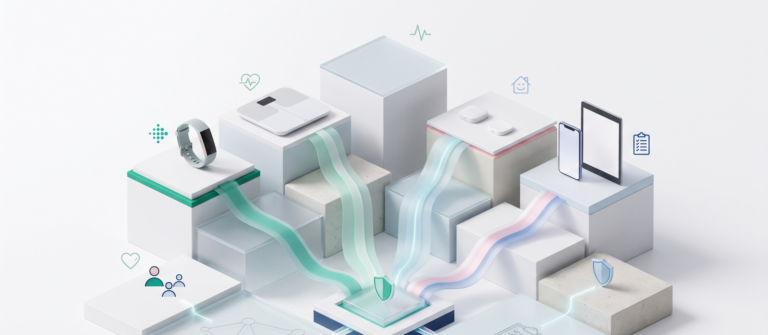
Explore the interactive image below for the full picture of what is collected, how, and with which tools.

Study Groups

The cohort is organised into three groups of increasing depth:

  • 50 participants complete questionnaires,
  • 10 use the LifeChamps app, 10 use the full LifeChamps system (app + devices).
Platform & Devices

The LifeChamps gateway serves as the data collection hub, with the RAISE Suite SDK integrated on top to enable FAIR-by-design ingestion. The devices to be used are:

  • Fitbit Charge 6
  • Withings ScanWatch 2 wearable,
  • Withings Body Smart digital scale.


Data Types

Patient-reported outcomes covering:

  • symptoms,
  • mood,
  • medication adherence, nutrition,
  • social support and
  • fear of recurrence 
  • daily activity,
  • vital signs,
  • sleep
  • body-composition data
Approach

A shared machine-actionable Data Management Plan (ma-DMP) harmonises this study with the Stroke use case, ensuring interoperability across both sub-studies.

Use Case Implementation Phases

May–December 2026
Data Collection Without RAISE
A baseline cycle using existing tools and workflows. Questionnaire and device data are collected from cancer survivors as normal, establishing the reference point against which RAISE Suite's impact will be measured. Ethical approval is secured in September 2026, with first participants enrolled at each site from October 2026.
May–December 2026
January– April 2027
SDK Integration & RAISE Onboarding
The RAISE Suite SDK is integrated with the LifeChamps gateway. The team onboards to the RAISE Portal, creates the shared machine-actionable Data Management Plan (ma-DMP), describes datasets with FAIR-aligned metadata, and connects devices to the automated ingestion pipeline.
January– April 2027
May 2027 - May 2028
Data Collection with RAISE
The same collection cycle is repeated, now powered by RAISE Suite: data is captured automatically via the SDK and managed and analysed on the RAISE Portal, ending in a FAIR-compliant, privacy-preserving dataset and a scientific publication.
May 2027 - May 2028

Use Case Outcomes

Real-World Survivorship Data

Smart Devices Meet Patient Voice

A multimodal dataset combining wearable and home-device data with patient-reported outcomes, supporting the monitoring of quality of life and frailty in cancer survivors.

A Harmonised Collection Protocol

One ma-DMP, Multiple Sites

A common, FAIR-by-design data collection protocol validated across transnational sites, assessed for data quality and interoperability.

FAIR Data in a Regulated Field

Interoperable, Compliant, Reusable

Proof that RAISE Suite can deliver interoperable, high-quality health data collection under strict privacy regulation, including sharing beyond the EU.